
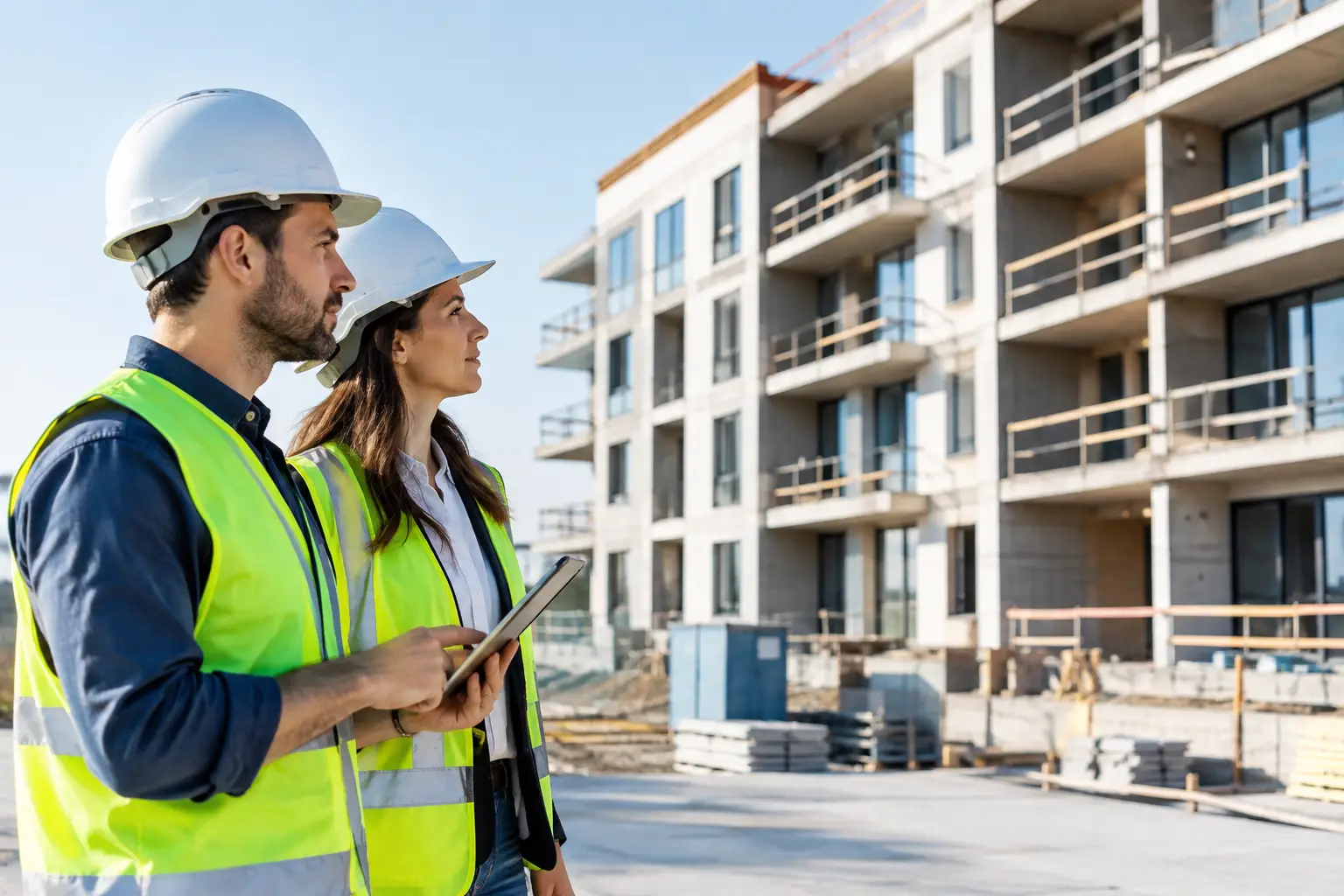
Apartment Construction Management That Protects Value
Apartment construction management brings scopes, budgets, schedules, and resident needs together to protect income, curb appeal, and real property value.
A renovation can look productive on a property tour and still weaken an owner’s return. Units may sit offline too long, materials may be selected without regard for replacement cost, or a contractor may finish the visible work while leaving drainage, safety, or maintenance issues behind. Apartment construction management exists to prevent that disconnect. It turns construction activity into a disciplined owner decision: what to improve, what it will cost, how long it will affect operations, and whether the result will support higher income or protect the asset.
For established apartment communities, construction is rarely just a project. It affects leasing, resident satisfaction, maintenance workload, property presentation, and the capital plan. The best work is not defined by how much gets spent. It is defined by whether the property performs better after the work is complete.
What Apartment Construction Management Should Deliver
Apartment construction management is the coordination of planning, budgeting, bidding, scheduling, quality control, and closeout for improvements at a multifamily property. That definition sounds straightforward. The hard part is managing these responsibilities while apartments remain occupied and the owner still needs dependable cash flow.
A capable construction manager looks beyond a contractor’s price. The lowest bid can become the most expensive choice when the scope is incomplete, the schedule is unrealistic, or the installer lacks the capacity to finish properly. Conversely, the highest-cost option is not automatically the best answer. Owners need a clear view of the expected return, operating impact, useful life, and ongoing maintenance requirement of each improvement.
That work should connect directly to the asset’s business plan. If the objective is reducing vacancy, the priority may be faster unit turns, better first impressions, and targeted interior upgrades. If retention is the concern, parking, lighting, common-area comfort, and maintenance reliability may matter more than a broad cosmetic refresh. If deferred maintenance is mounting, the right first move may be roofs, plumbing, paving, or exterior envelopes that protect the property from larger losses.
Start With the Problem, Not the Product
Owners are frequently presented with a product solution before anyone has documented the operating problem. New countertops, paint packages, flooring, or fitness equipment can be appropriate. But an upgrade should not begin with a catalog or a trend.
Start by asking what is limiting performance. Are prospects walking because the curb appeal signals poor upkeep? Are residents leaving because recurring repairs are handled slowly or incompletely? Are turns taking too long because maintenance teams lack materials or a consistent scope? Is water intrusion creating repeated interior damage? The answer determines both the scope and the order of work.
This is where property management and construction oversight must work together. On-site teams see the daily friction points that do not always appear in financial statements: stair lighting that fails, gates that create access problems, laundry rooms that look neglected, or unit finishes that cannot withstand normal resident use. Asset-level planning then tests those observations against budget, rent positioning, and hold period.
A property intended for a near-term sale may justify a different improvement strategy than one held for another decade. There is no universal renovation package. The right scope depends on condition, competition, resident profile, achievable rent growth, and the owner’s investment horizon.
Build a Scope That Can Be Priced and Managed
Vague scopes create change orders, schedule disputes, and inconsistent quality. A useful construction scope identifies the work area, materials, installation standards, exclusions, access requirements, permits, cleanup expectations, and completion criteria. It also separates true unknowns from items that should have been identified before bidding.
For occupied communities, the scope must address resident communication and access. A contractor may be able to complete a unit upgrade in several days under ideal conditions. That does not mean the same timeline works when residents need notice, pets must be accommodated, parking is constrained, or work must occur within limited hours. These details are not administrative extras. They determine whether the project creates resident frustration or earns confidence.
Clear standards also protect consistency across time. If a community is renovating units in phases, the owner should know which finishes are approved, where they are used, how they are stocked, and what substitutions require approval. Standardization reduces purchasing errors, shortens turns, and keeps maintenance teams from inheriting a patchwork of incompatible materials.
Control Cost Before It Becomes a Surprise
A budget is not a single number. It is a working control document that tracks hard costs, design or permit expenses, contractor overhead, contingency, owner-provided materials, and the cost of operational disruption. For example, taking units offline may be necessary for a major renovation, but the lost rent and timing effect need to be considered alongside the construction invoice.
Contingency deserves honest treatment. Older properties often reveal concealed conditions after walls, flooring, or exterior finishes are opened. A reasonable contingency is not permission for loose planning. It is recognition that some risk cannot be eliminated before work begins. The goal is to investigate enough upfront to reduce surprises, then manage the remaining uncertainty with defined approval thresholds.
Construction oversight should provide owners with straightforward answers to a few essential questions:
- What has been committed, spent, and remaining in the budget?
- What changes have been requested, and why are they necessary?
- Which decisions could affect the completion date or operating income?
- Does the expected benefit still justify the investment?
- What work remains before the project can be fully closed out?
Those questions are especially important when a project moves from isolated repairs into a broader capital improvement plan. Replacing a few sections of failing fencing is maintenance. Reworking a community’s exterior identity, circulation, lighting, and landscaping is a strategic investment. The level of analysis should match the consequence of the decision.
Schedule Around Residents and Revenue
Construction schedules often fail because they focus only on trade sequencing. At apartment communities, the schedule must also account for leasing demand, unit availability, resident notices, weather, inspections, material lead times, and site logistics.
Exterior projects in the Wasatch Front can be particularly sensitive to seasonality. Paving, roofing, paint, concrete, and landscape work all carry weather considerations. Waiting until the work is urgent can limit contractor availability and force decisions under pressure. Long-term capital planning gives owners the opportunity to schedule major projects when conditions, pricing, and property operations are more favorable.
For interior renovations, turnover periods are valuable but limited. The construction plan should identify which tasks can be completed during a standard turn and which require a vacant unit for longer. If the plan calls for substantial upgrades, leasing and maintenance teams need a shared process for releasing units, confirming completion, photographing the result, and returning the apartment to market without delay.
A delayed handoff has real cost. Every unfinished punch item, missing appliance, or failed inspection can extend vacancy. Construction management should treat ready-to-rent status as the finish line, not merely the day a contractor says the work is done.
Quality Control Is More Than a Final Walkthrough
The visible finish of a project matters, but quality control should begin long before closeout. It includes verifying materials on delivery, confirming installation methods, reviewing work in progress, documenting deficiencies, and making sure corrections are completed before the contractor leaves the site.
This protects more than appearance. Improperly installed flooring can lead to premature replacement. Incomplete caulking can invite water damage. A poorly planned plumbing repair can create repeat service calls. These failures reduce resident confidence and pull maintenance teams away from preventive work and unit turns.
Thorough closeout also matters. Owners should receive warranties, permits, inspection records where applicable, product information, final invoices, and a clear record of completed work. If future maintenance teams do not know what was installed or who performed the work, the property loses part of the value created by the project.
Treat Construction as Part of Asset Performance
The strongest construction decisions support day-to-day operations after the project is finished. Better exterior lighting can improve safety perception and reduce service issues. Durable flooring can shorten turns and lower replacement frequency. Thoughtful landscaping and signage can make a stronger first impression before a prospect enters the leasing office. A well-executed repair can prevent a small building issue from becoming a costly disruption.
That is why owners benefit from a partner that can evaluate the improvement, bid the work, oversee completion, and remain accountable for how the property performs afterward. Concept Multifamily approaches construction as one part of long-term ownership stewardship, not a separate event that ends when the invoice is paid.
The next time a property needs capital work, start with the operating result you need to improve. A clear objective, a defined scope, and disciplined field execution will do more for the balance sheet than a long list of upgrades ever will.
Share this article
One Comment
Leave A Comment
Follow us
In this post
Latest posts

November 20, 2026

November 20, 2026

November 20, 2026
Subscribe
Subscribe below to receive the New Concepts newsletter: insights on property management, investing, and the industry

[…] is where integrated property management and construction capability can change the outcome. Instead of applying temporary repairs until the issue becomes urgent, an […]