
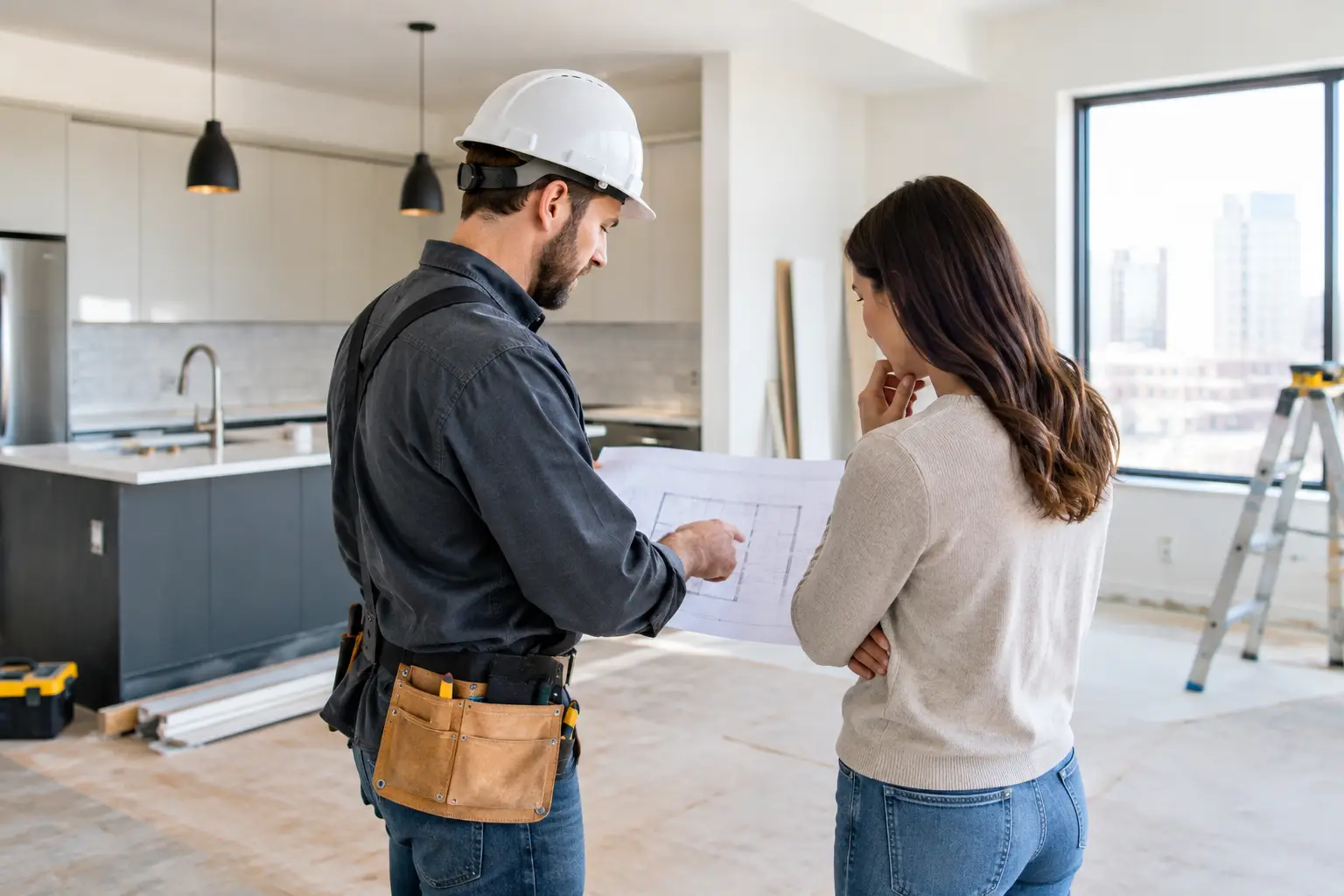
Choosing an Apartment Renovation Contractor
Choose an apartment renovation contractor who protects NOI, improves resident appeal, and delivers capital upgrades with scope, cost, and accountability.
A vacant unit sitting unfinished for three extra weeks is not just a construction delay. It is lost rent, leasing friction, and a signal that the property may not be under control. The right apartment renovation contractor understands that a renovation is not a stand-alone project. It is an operating decision that affects occupancy, resident satisfaction, maintenance workload, and the long-term value of the asset.
For apartment owners, the lowest bid rarely tells the full story. A contractor can price a job aggressively, then make up the difference through change orders, unclear exclusions, slow scheduling, or work that fails early. The better question is whether the contractor can help improve property performance while delivering a defined scope, realistic cost, and dependable follow-through.
What an Apartment Renovation Contractor Should Deliver
An apartment renovation contractor should begin with the owner’s objective, not a product list. Is the goal to reduce turnover time? Correct a recurring maintenance issue? Improve curb appeal enough to support stronger rents? Reposition an older community for a more competitive resident experience? Each objective requires a different scope, budget, and sequencing plan.
Unit turns, for example, require speed and repeatability. The contractor must coordinate inspections, materials, paint, flooring, repairs, cleaning, and final punch work without creating gaps between trades. A full property repositioning requires a different level of planning. Exterior improvements, common-area upgrades, signage, lighting, and landscaping may need to be phased around resident access, seasonal conditions, and leasing activity.
A capable contractor also separates cosmetic improvements from true asset protection. New cabinet hardware can improve first impressions. Replacing deteriorated plumbing components, failed exterior sealants, damaged stairs, or aging roofs protects the property from greater costs later. Both may be worthwhile, but they should not compete for the same capital without a clear return and priority.
Start With the Return, Not the Finish Package
Owners often receive renovation recommendations framed around what is popular in the market. That can be useful, but popularity is not an investment case. A finish package should be evaluated against achievable rent growth, lease-up velocity, maintenance savings, useful life, and the risk of over-improving relative to nearby competition.
A premium unit renovation may make sense in a high-demand submarket with comparable properties already proving stronger rents. In another community, durable mid-grade materials may produce a better return because they lower replacement costs and appeal to the resident profile without pushing rents beyond what the market will support.
The same discipline applies to exterior and common-area work. Fresh paint, improved lighting, repaired fencing, cleaner entry conditions, and consistent signage can strengthen curb appeal quickly. Yet owners should still ask what problem the project solves. If tours begin with cracked sidewalks, poor exterior lighting, and deferred maintenance, upgrading a clubhouse may not be the first use of capital.
An experienced contractor should be comfortable having this conversation. If a proposed improvement will not support a reasonable outcome, that should be said before materials are ordered. Honest planning protects the budget and keeps capital focused on work that improves income, reduces future expense, or strengthens the property’s market position.
Scope Gaps Create Expensive Surprises
Most renovation disputes begin before work starts. The scope may sound complete but fail to identify demolition, subfloor repair, drywall patching, electrical corrections, permit requirements, appliance installation, haul-off, or final cleaning. Those omissions become change orders, schedule extensions, and frustration when the job is underway.
Before approving a proposal, owners should expect a clear written scope that identifies what is included, what is excluded, who supplies materials, and how unforeseen conditions will be handled. In occupied properties, it should also address resident notices, access procedures, work hours, site protection, parking, and cleanup expectations.
A reliable bid does not promise that an older building will reveal no surprises. Older apartment communities often contain hidden water damage, outdated wiring, failing drain lines, or previous repairs that were never completed correctly. What matters is how the contractor identifies those risks, documents them, prices the options, and obtains approval before moving forward.
A disciplined preconstruction review can reduce many of those surprises. Walk representative units. Inspect recurring maintenance trouble spots. Verify existing conditions rather than relying only on old plans or a quick visual review. Review lead times for flooring, cabinets, appliances, fixtures, and specialty materials. The more decisions made before the first day of work, the fewer costly decisions are made under pressure.
Evaluate the Contractor’s Operating Discipline
Construction skill matters, but apartment renovations also demand operational discipline. The contractor will be working around leasing teams, maintenance staff, residents, vendors, and sometimes active move-ins. A crew that produces acceptable work but communicates poorly can still damage the resident experience and slow the property down.
Ask how the contractor manages scheduling, material procurement, quality control, and closeout. The answer should be specific. Owners need to know who is responsible for daily coordination, how progress is reported, when inspections occur, and who resolves punch-list items after the crew leaves.
Four questions can quickly expose whether a contractor has a workable process:
- How will you phase work to limit vacancy days and resident disruption?
- What conditions commonly create change orders, and how will you document them?
- Who confirms that each unit or project area is ready for leasing or resident use?
- What is your process for warranty work and unresolved punch items?
The answers should not be vague assurances. A contractor who has worked successfully in multifamily settings can describe the sequence, the handoffs, and the accountability points. They know that a unit is not complete when the last installer leaves. It is complete when it is clean, functional, inspected, and ready to show.
Renovate for Durability and Maintenance Reality
Apartment finishes absorb more use than a typical owner-occupied home. The best-looking material at installation may create recurring labor and replacement expense if it is difficult to repair or cannot withstand regular turns. Owners should select materials based on lifecycle performance, not showroom appeal alone.
This does not mean every property needs the least expensive finish. It means choosing products appropriate for the asset, resident expectations, and maintenance capacity. Standardized paint colors, flooring lines, fixtures, and hardware simplify future repairs and reduce time spent sourcing discontinued materials. They also make unit turns more predictable.
Durability has an operational side as well. A renovation that relocates access panels, improves shutoff access, corrects drainage, or replaces a recurring failure point may not be highly visible to prospects, but it can reduce maintenance calls and prevent disruptive repairs later. Those improvements protect both the operating budget and resident confidence.
Connect Renovations to a Capital Plan
One-off projects often cost more because they force owners into reactive decisions. A long-term capital plan gives renovations context. It identifies major building systems, estimates timing, prioritizes risk, and helps ownership decide which improvements should be completed together.
For example, it may be more efficient to coordinate exterior paint with siding repairs, lighting upgrades, gutter work, and signage improvements than to address each item separately over several years. The right combination depends on available capital, property condition, seasonality, and leasing needs. Combining projects can reduce mobilization costs, but it can also strain cash flow if too much work is undertaken at once.
This is where an integrated operating perspective matters. Construction decisions should be informed by property condition, current maintenance history, market rents, occupancy trends, and the owner’s hold strategy. Concept Multifamily approaches renovation work with that full investment picture in view, helping owners connect improvement decisions to operating performance rather than treating construction as an isolated expense.
Choose Accountability Over a Cheap Number
A renovation contractor should make ownership easier, not create another layer of supervision. The right partner brings defined scopes, realistic schedules, transparent pricing, and a practical understanding of how work affects residents and property staff. Just as important, they remain accountable when a project reaches the final details that are easy to overlook and expensive to ignore.
The best renovation decisions are rarely the flashiest. They are the ones that keep units moving, reduce recurring problems, strengthen resident impressions, and protect the asset for the next leasing cycle and the next ownership decision.
Share this article
Follow us
In this post
Latest posts

November 20, 2026

November 20, 2026

November 20, 2026
Subscribe
Subscribe below to receive the New Concepts newsletter: insights on property management, investing, and the industry