
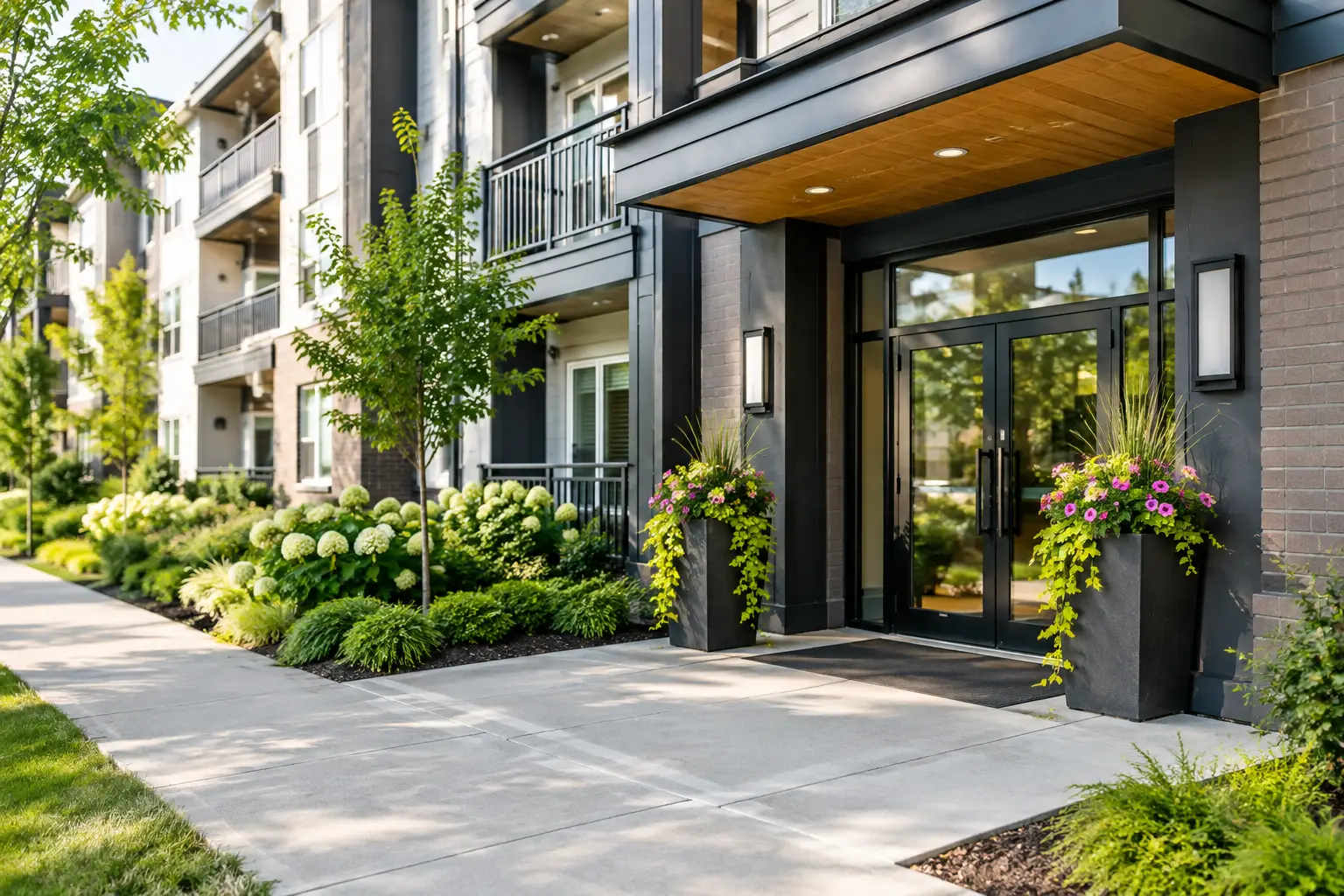
Apartment Curb Appeal Improvements That Perform
Apartment curb appeal improvements can strengthen first impressions, support leasing, retain residents, and protect property's long-term value and income.
A prospect has usually formed an opinion before the leasing conversation begins. They notice the monument sign, the condition of the drive lanes, the landscaping, the lighting, and whether the entry feels cared for. Apartment curb appeal improvements influence that first judgment, but their value is not limited to appearance. Done with discipline, they support occupancy, resident confidence, renewal decisions, and the long-term condition of the asset.
For an owner, the question is not whether a property can look better. Almost every established community can. The question is which improvements solve visible problems, improve the resident experience, and justify the capital required. The answer requires more than choosing attractive finishes. It requires a clear understanding of the property’s market position, maintenance history, and operating goals.
Start With the Resident and Prospect Experience
Curb appeal begins at the point where someone turns toward the property, not at the leasing office door. A faded sign, broken irrigation head, damaged curb, or overflowing dumpster communicates a lack of control. Even when units are clean and the staff is responsive, visible neglect can create doubt before a prospect steps inside.
Walk the property as a new resident would. Enter from each access point. Visit during the day and after dark. Look at the community from the street, through the parking areas, and along the most common walking paths. This simple exercise often exposes issues that become invisible to onsite teams because they see them every day.
Pay close attention to the arrival sequence: signage, landscaping, pavement, parking, exterior paint, building numbers, lighting, and the leasing office entry. Then follow the resident path to mailboxes, trash areas, amenities, stairwells, and apartment doors. A property does not need every surface to be new. It does need to feel intentional, safe, and consistently maintained.
Apartment Curb Appeal Improvements With Real Operating Value
The strongest projects combine visual improvement with a practical operating benefit. They reduce recurring maintenance, improve safety, make the property easier to navigate, or help staff present the community with confidence. Cosmetic work that creates a better photograph but adds frequent replacement costs deserves careful scrutiny.
Improve the Property’s First 100 Feet
The entrance has outsized influence because it is the most visible expression of ownership standards. Refreshing monument signage, repairing deteriorated curbs, improving landscaping beds, and addressing cracked pavement can materially change the arrival experience without renovating every building at once.
In many Wasatch Front communities, seasonal weather makes durable planning essential. Freeze-thaw cycles, snow removal, irrigation damage, and intense summer sun can quickly expose deferred maintenance. Select materials and landscape designs that can withstand local conditions and that onsite teams can maintain consistently. A high-maintenance planting plan may look impressive at turnover, but it becomes a liability if the budget and labor model cannot support it.
Treat Lighting as Both Presentation and Risk Management
Exterior lighting is one of the clearest examples of an improvement that affects appearance and operations at the same time. Dark parking areas, poorly lit sidewalks, and inconsistent building lighting can make a community feel less secure, even if there is no immediate safety incident.
Audit fixtures at night rather than relying on daylight inspections. Replace failed lamps promptly, correct lighting gaps, and consider efficient fixtures where utility savings and maintenance reduction support the investment. The goal is not excessive brightness. It is clear, reliable visibility at entries, parking areas, stairs, walkways, and shared amenities.
Repair the Details That Signal Neglect
Residents and prospects notice the small failures owners sometimes categorize as minor: bent handrails, peeling paint, damaged screens, stained breezeways, missing address numbers, loose fencing, and worn dumpster enclosures. Individually, these issues may not require major capital. Together, they make a property feel unmanaged.
A disciplined correction plan separates immediate repairs from larger capital work. Resolve obvious deficiencies quickly, then build recurring inspections into the operating rhythm. This approach prevents the property from slipping back after an initial cleanup and reduces the costly pattern of addressing everything only when occupancy declines.
Make Common Areas Earn Their Space
Amenity areas should support the resident profile and rent level of the community. A neglected picnic area, dated clubhouse entrance, or unusable courtyard can weaken curb appeal because it occupies visible space without delivering value. Conversely, a clean, well-lit, modest amenity can make the property feel more livable and competitive.
The right investment depends on the asset. At one property, updated seating, shade, and landscaping may improve daily use. At another, the better decision may be removing an underused feature and creating a cleaner, lower-maintenance open area. Owners should resist copying amenities from newer competitors without first asking whether their residents will use them and whether the property can maintain them.
Prioritize Before Spending Capital
Not every visible issue deserves the same response. Owners get better results when they rank projects by leasing impact, resident benefit, risk reduction, maintenance burden, and expected life cycle. This creates a capital plan rather than a collection of reactive purchases.
A practical sequence often starts with health, safety, and water intrusion concerns. Next come projects that affect first impressions and daily resident use, such as lighting, signage, pavement repairs, landscaping, and exterior cleaning. Larger aesthetic upgrades, including paint schemes, façade work, or major amenity renovations, should follow a clear return analysis and a realistic construction schedule.
Timing matters. Exterior paint may be highly visible, but it can be a poor first move if roofs, drainage, or siding repairs remain unresolved. New landscaping is also wasted if irrigation coverage is inconsistent or if contractors will soon disturb the area for other work. Coordinate scopes so the property does not pay twice to restore the same area.
Connect Curb Appeal to Leasing and Retention
Curb appeal is not a substitute for clean units, responsive maintenance, or professional leasing. It is the visible standard that makes the rest of the operation more believable. When a prospect sees orderly grounds and well-maintained common areas, they are more likely to believe claims about service and care inside the apartment.
The same principle applies to current residents. People are more willing to renew when their home community feels stable and respected. They may not describe their decision as a response to fresh mulch or repaired fencing, but they notice whether unresolved issues accumulate around them. Pride of place is built through repeated evidence that ownership is paying attention.
Track results after work is completed. Leasing teams should document prospect feedback and objections. Maintenance teams should monitor whether new materials or landscape choices create fewer service requests. Ownership should compare occupancy, renewal performance, turn costs, and concessions against the capital invested. Curb appeal projects rarely have a single, isolated return metric, but they should still be held accountable to operating outcomes.
Avoid the Common Mistakes
The most expensive curb appeal mistake is treating it as a one-time event. A major cleanup before photography or a property tour may create a short-lived improvement, but deferred maintenance returns quickly without standards, inspections, and budget discipline.
Another mistake is overspending on finishes that do not match the submarket or the property’s achievable rents. An upscale entrance package may be appropriate for a repositioning strategy, but not if unit interiors, service levels, or surrounding conditions cannot support the new price point. Improvement plans must fit the asset’s actual business plan.
Finally, avoid fragmenting responsibility. Landscaping, maintenance, construction, and leasing all see different parts of the property, but owners need one coordinated view of priorities. When scopes are disconnected, work is duplicated, visible problems persist, and capital decisions become harder to defend.
A well-run community does not need to chase every design trend. It needs an exterior standard that residents can see, staff can maintain, and ownership can support over time. Concept Multifamily approaches curb appeal as part of a larger operating commitment: identify the details that affect performance, complete the work thoroughly, and keep the property positioned to compete long after the initial improvement is finished.
Share this article
One Comment
Leave A Comment
Follow us
In this post
Latest posts

October 17, 2026
October 17, 2026

October 17, 2026
Subscribe
Subscribe below to receive the New Concepts newsletter: insights on property management, investing, and the industry

[…] Curb appeal is often discussed as a leasing tool. It is also a resident-retention tool. People want to feel good about where they live when they pull in after work, walk a guest to their car, or come home at night. Neglected landscaping, overflowing trash, broken signage, dim lighting, and worn common areas communicate that the property is slipping. […]